Straw bale Cabin for University of Utah
This straw bale cabin project developed in collaboration with the University of Utah explores compact, energy-efficient residential design using natural building systems. The project includes construction drawings and wall details focused on performance, simplicity, and educational application.
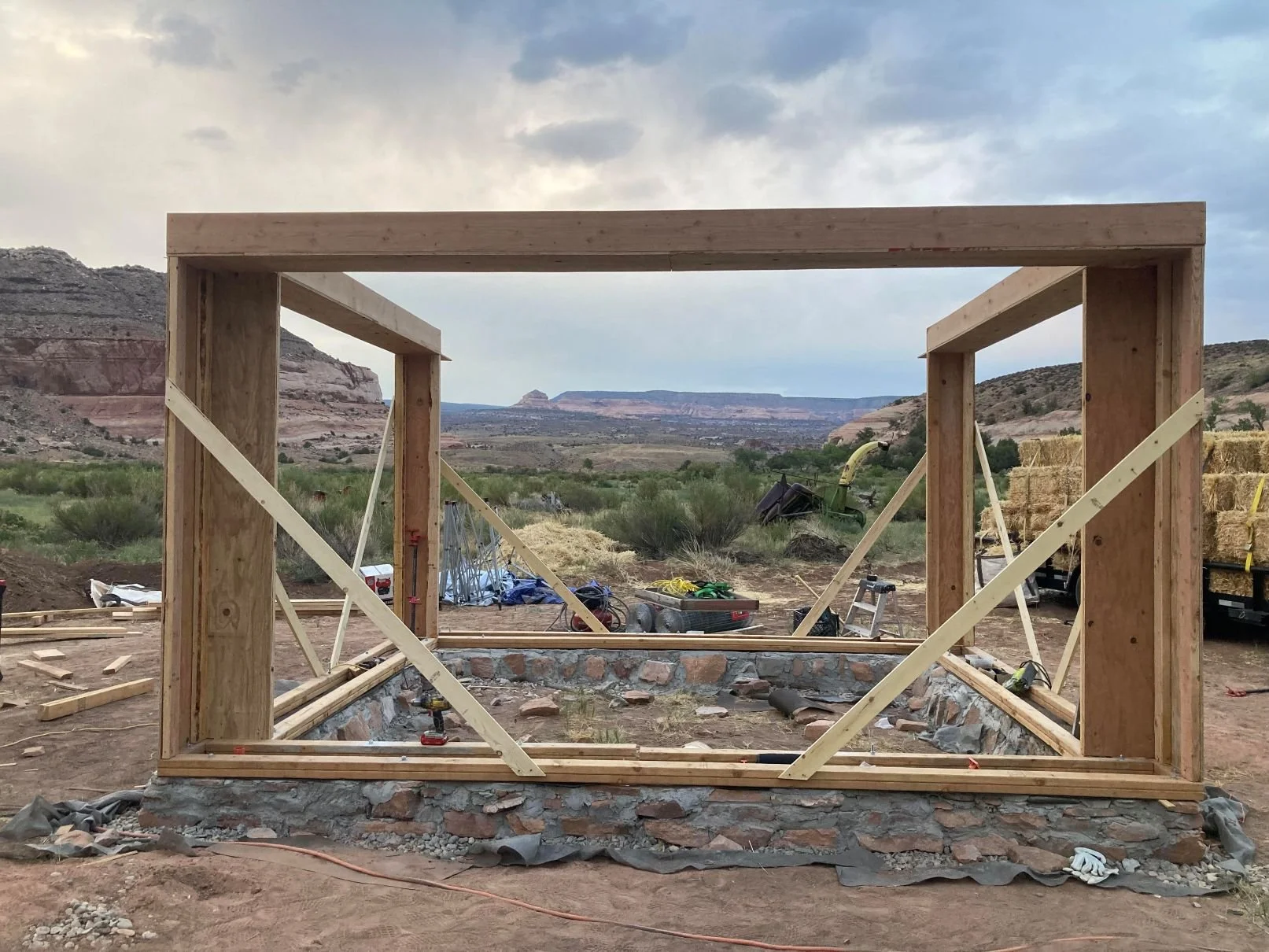
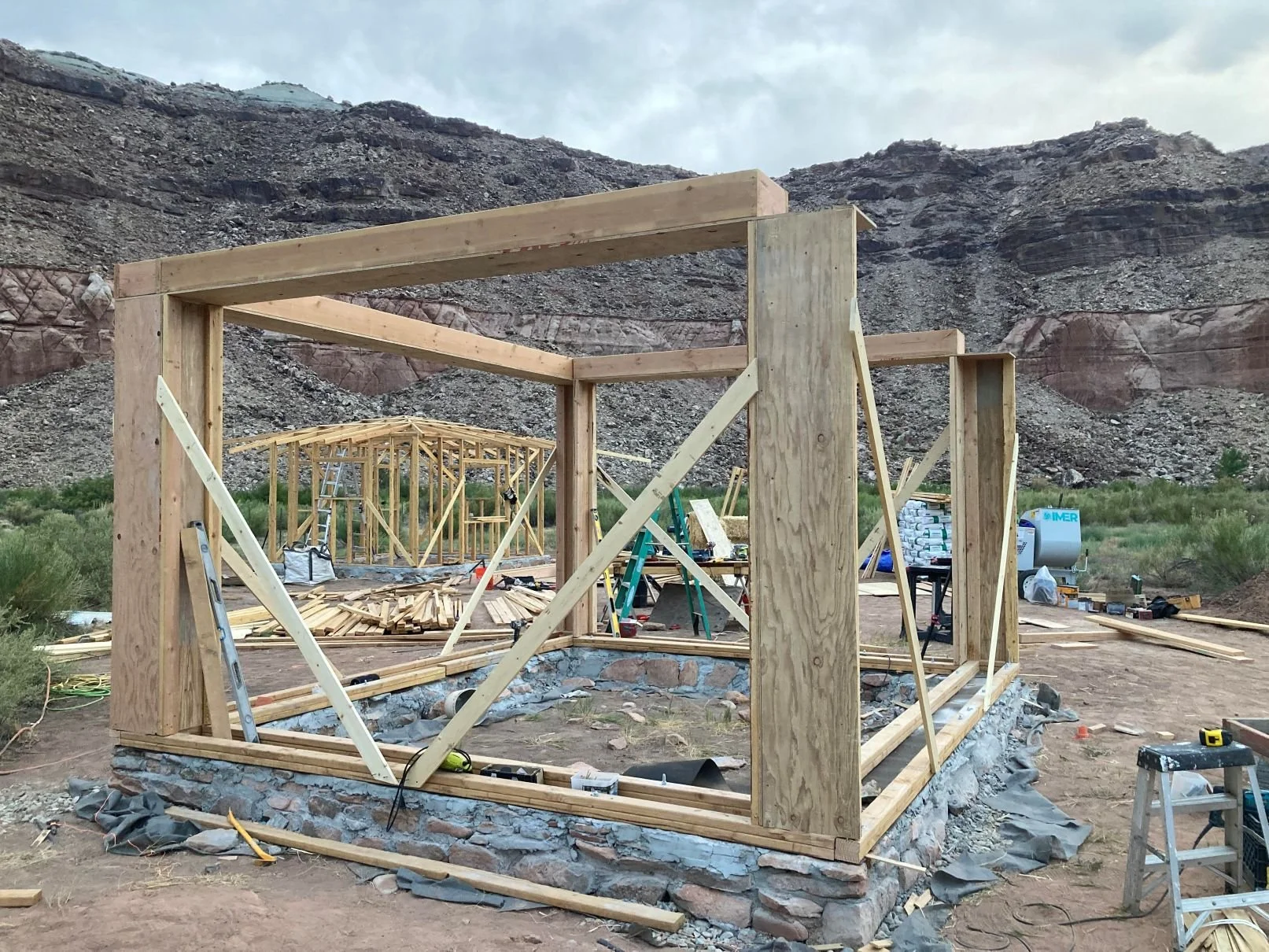
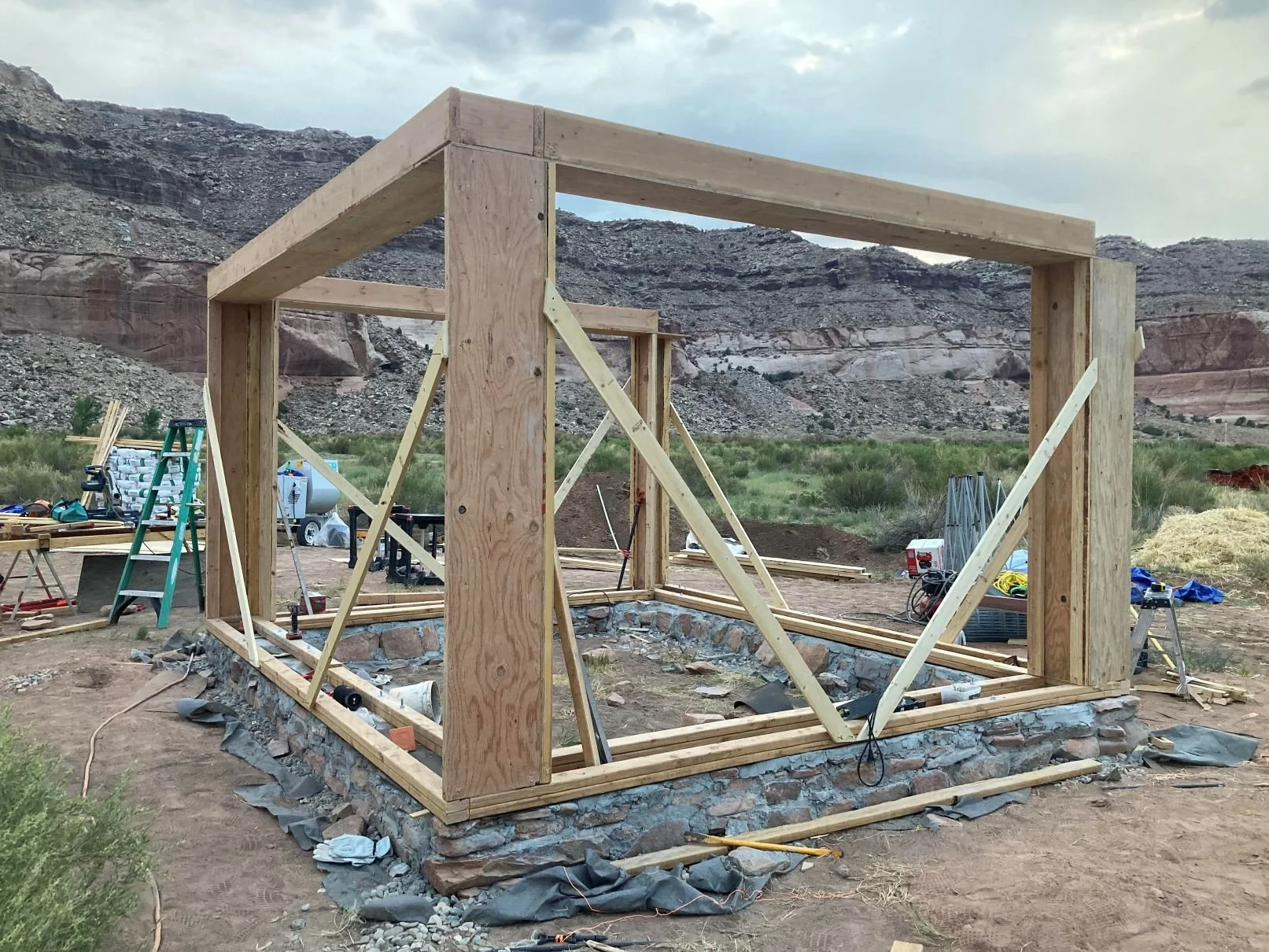
In the spring, I was invited by faculty at the University of Utah to contribute to a hands-on academic research initiative focused on low-carbon construction. The project centers on the design and construction of a series of small cabins—each 15' x 13' (approximately 200 square feet)—built using a range of natural and low-impact building systems.
Eight cabins are being constructed to an identical footprint and architectural design, with each one utilizing a different material strategy, including straw bale, rammed earth, adobe, cob, and hempcrete. This controlled approach allows for direct comparison of material performance, constructability, and long-term viability within a real-world context.
My role in the project was to develop the construction drawings for the straw bale cabin. The design emphasizes clarity, buildability, and compatibility with academic research goals, while remaining rooted in proven straw bale construction principles. The cabin is being built by students and faculty as part of the curriculum, serving both as an instructional framework and a full-scale research prototype.
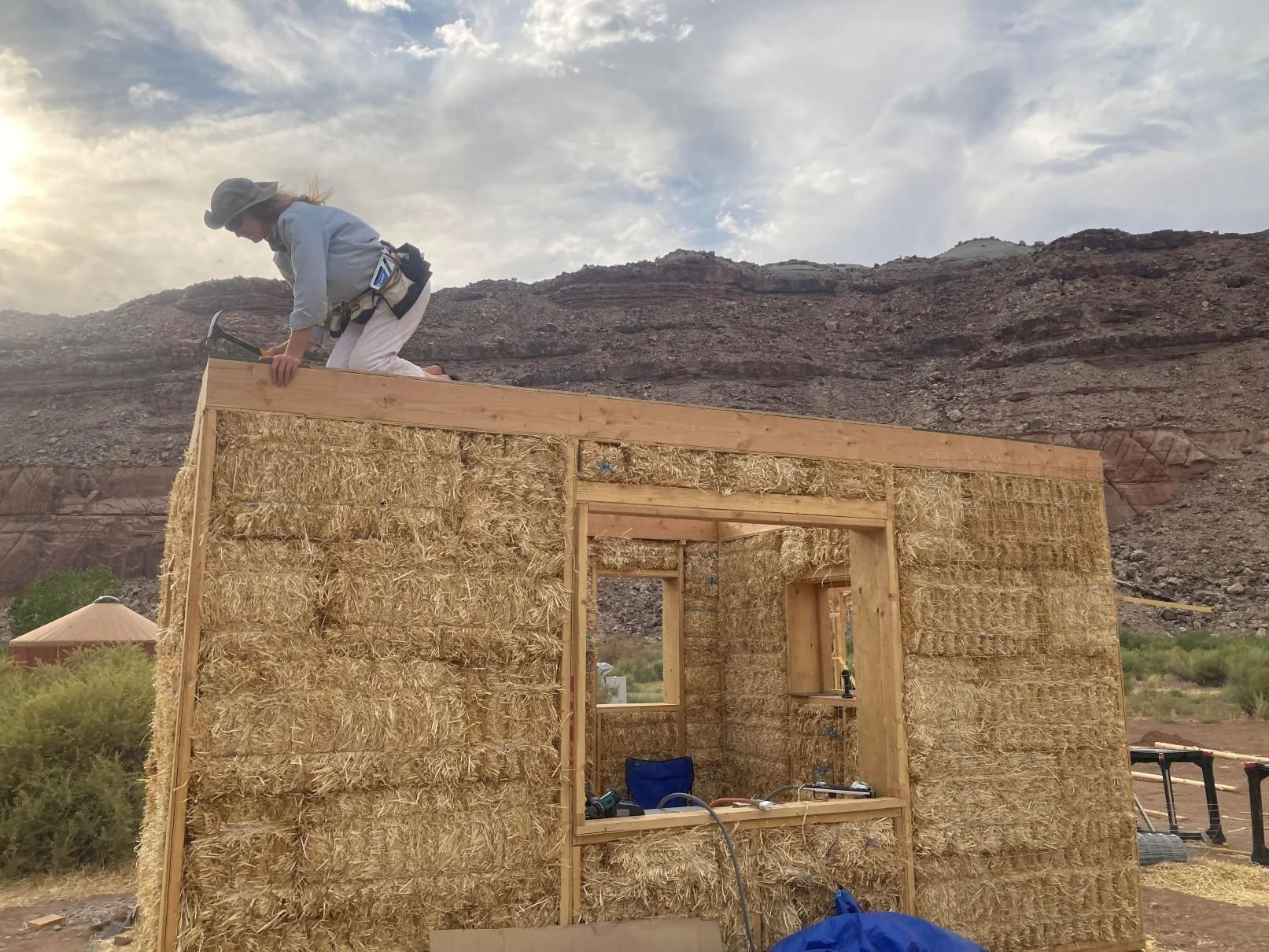
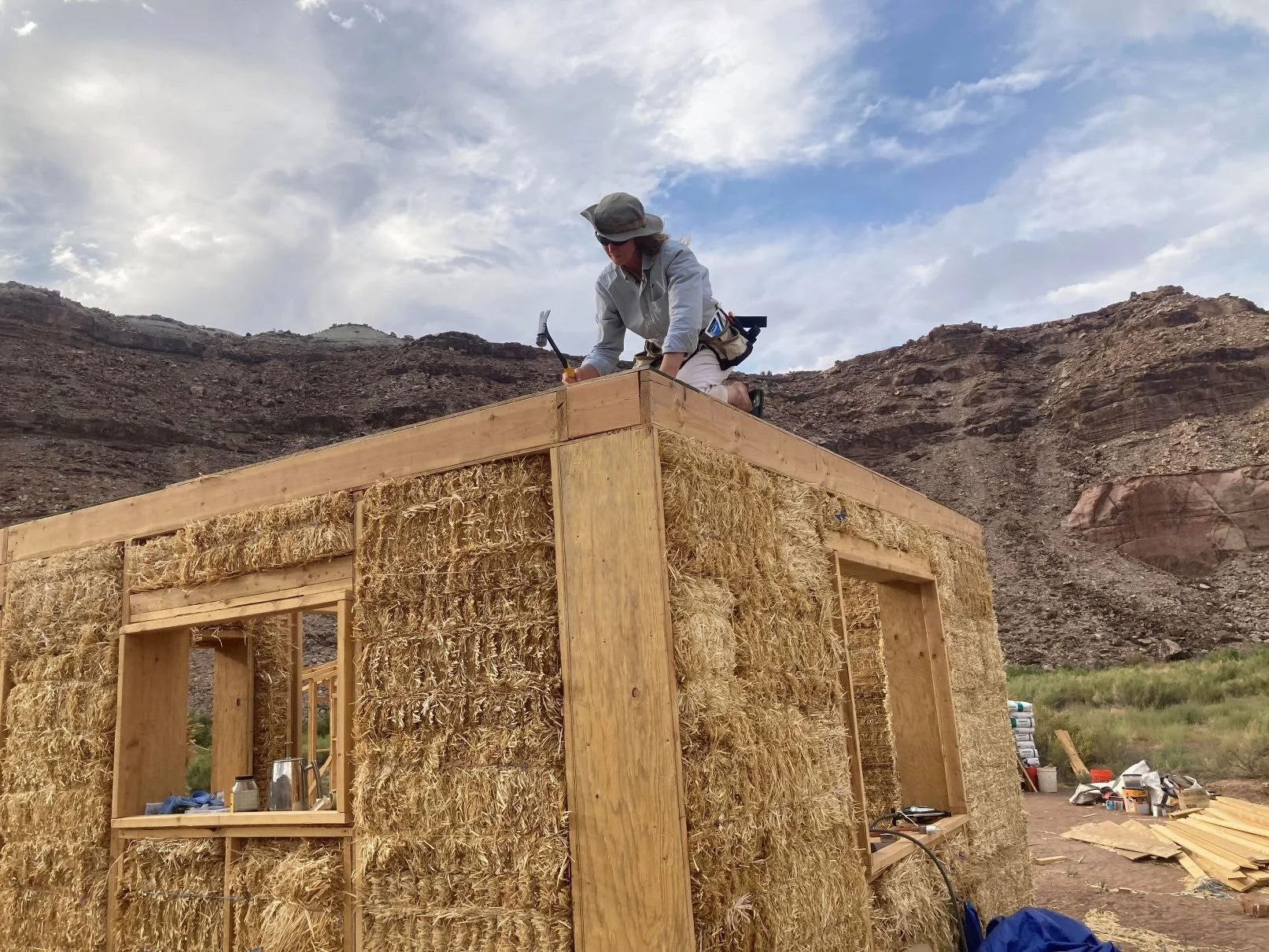
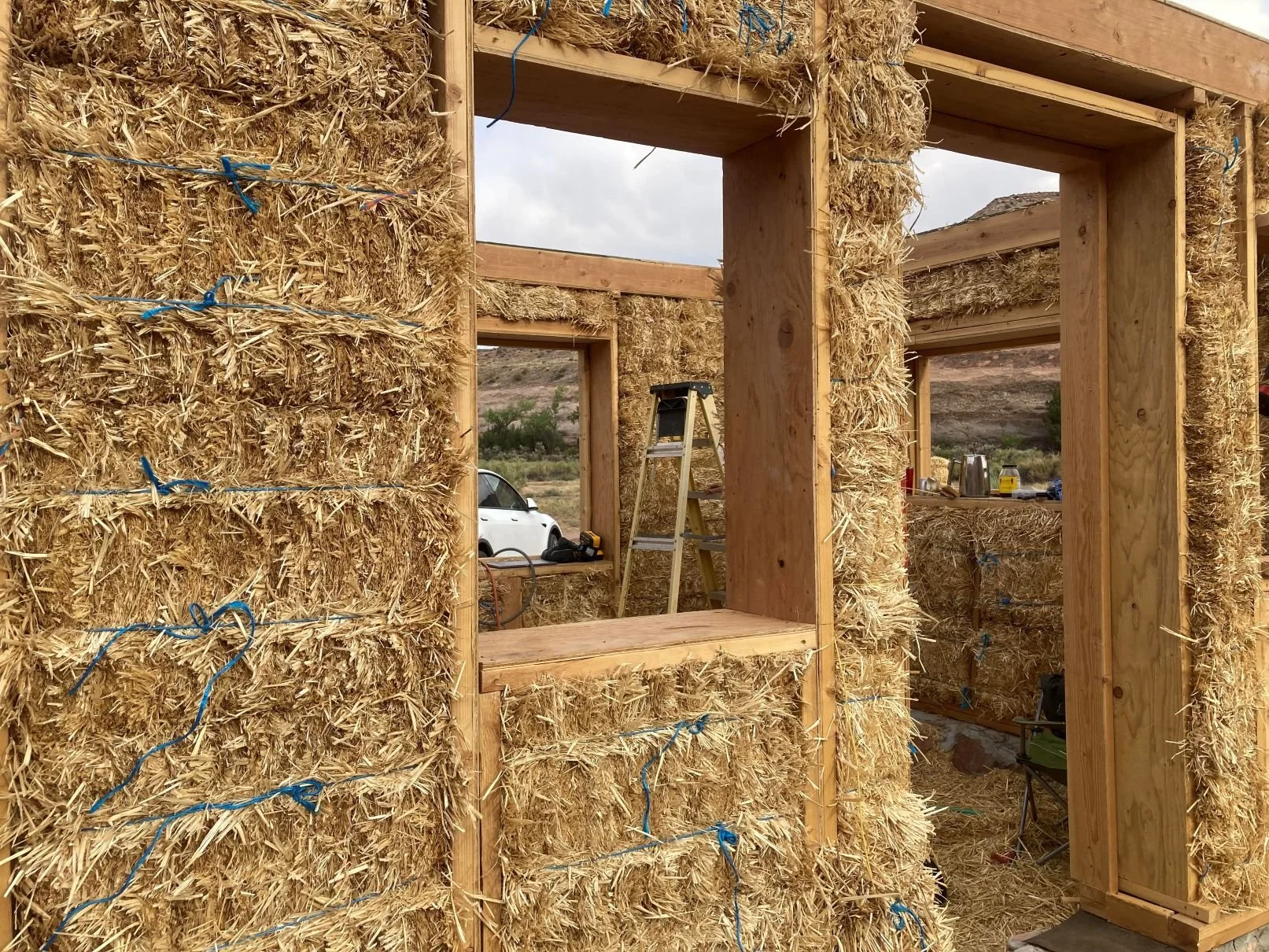
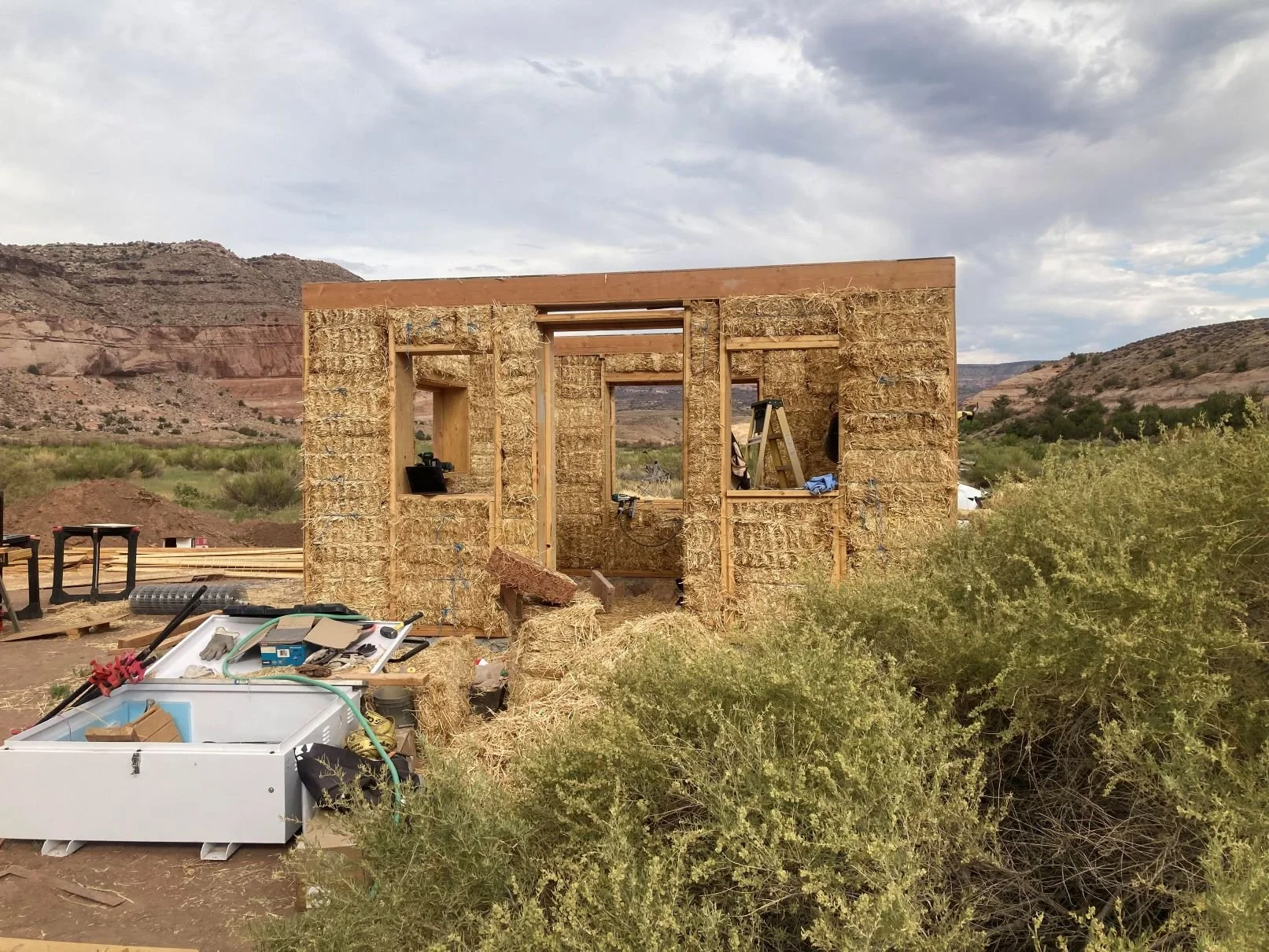
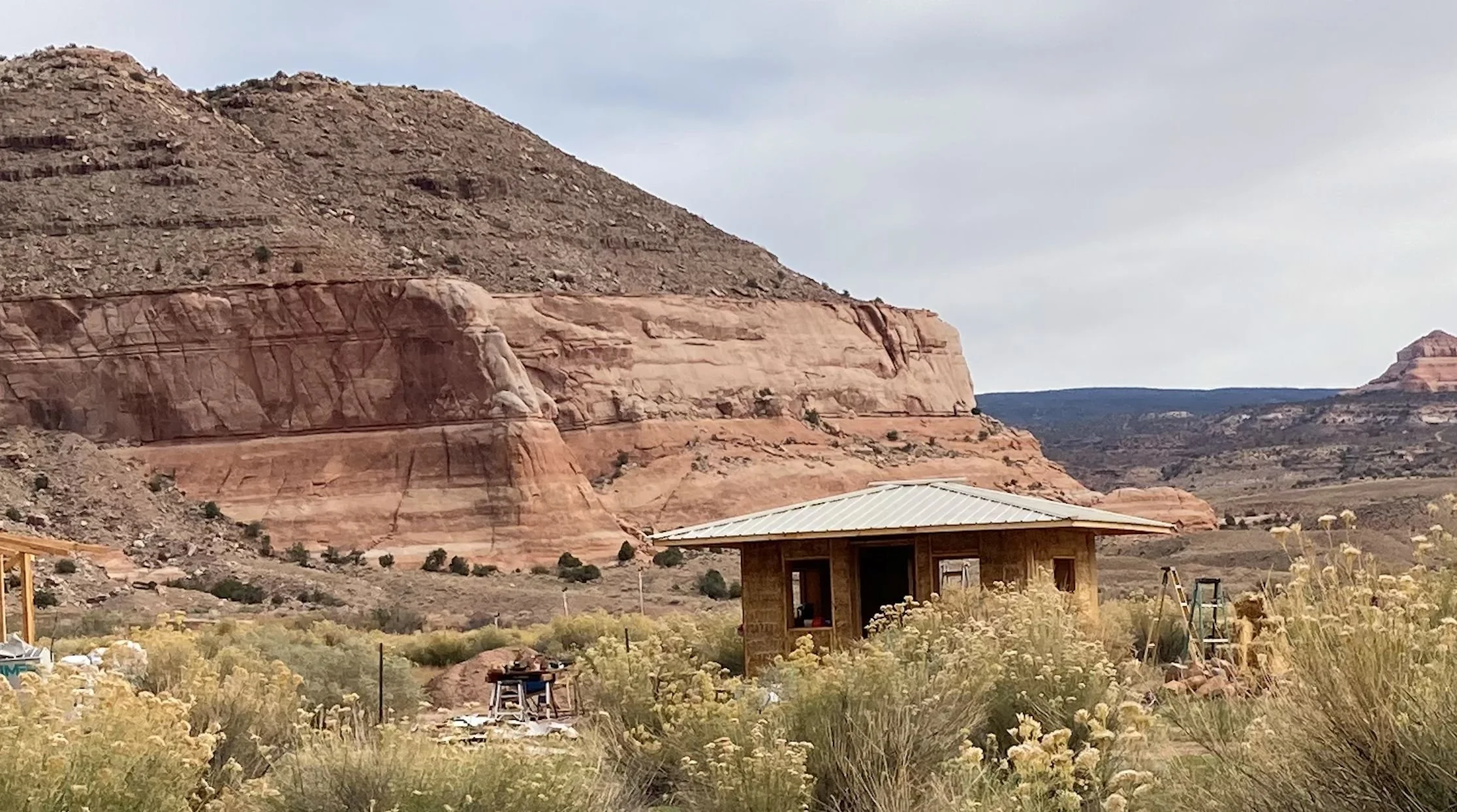
Construction began in early summer. The straw bale wall system is now complete, and the project is transitioning into roof framing and assembly. The roof design is a low-pitched Dutch gable, selected to balance material efficiency, weather protection, and constructability. Exterior plastering will follow once the roof is completed.
This project represents an intersection of design practice, education, and applied research. It is encouraging to see straw bale construction explored within an academic setting, and I am grateful for the opportunity to contribute to a collaborative effort aimed at advancing low-carbon building strategies.
Construction System: Straw Bale | Suitable for Owner-Builders
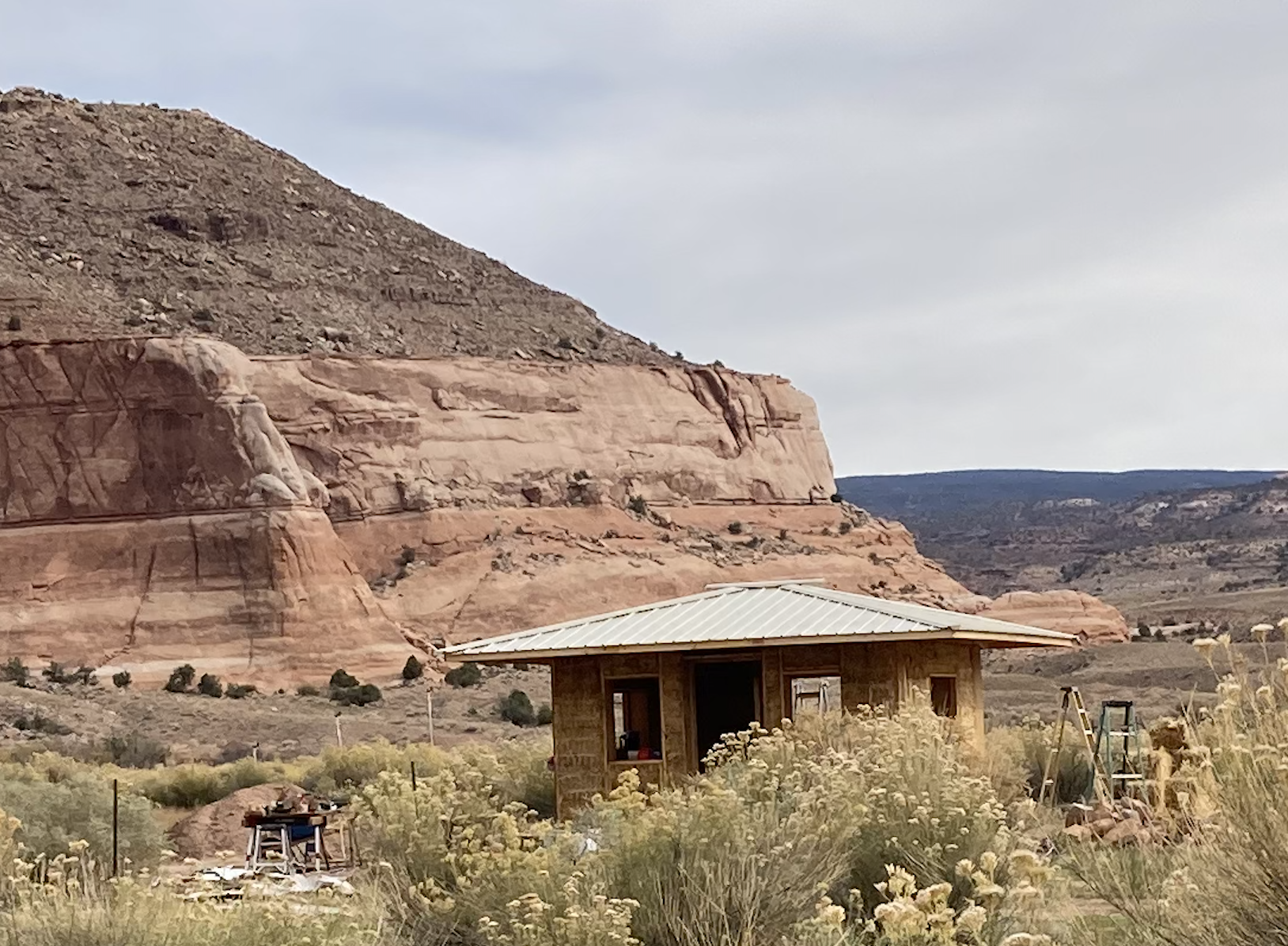
Straw bale cabin built at the University of Utah as part of a low-carbon construction research project comparing natural building techniques.